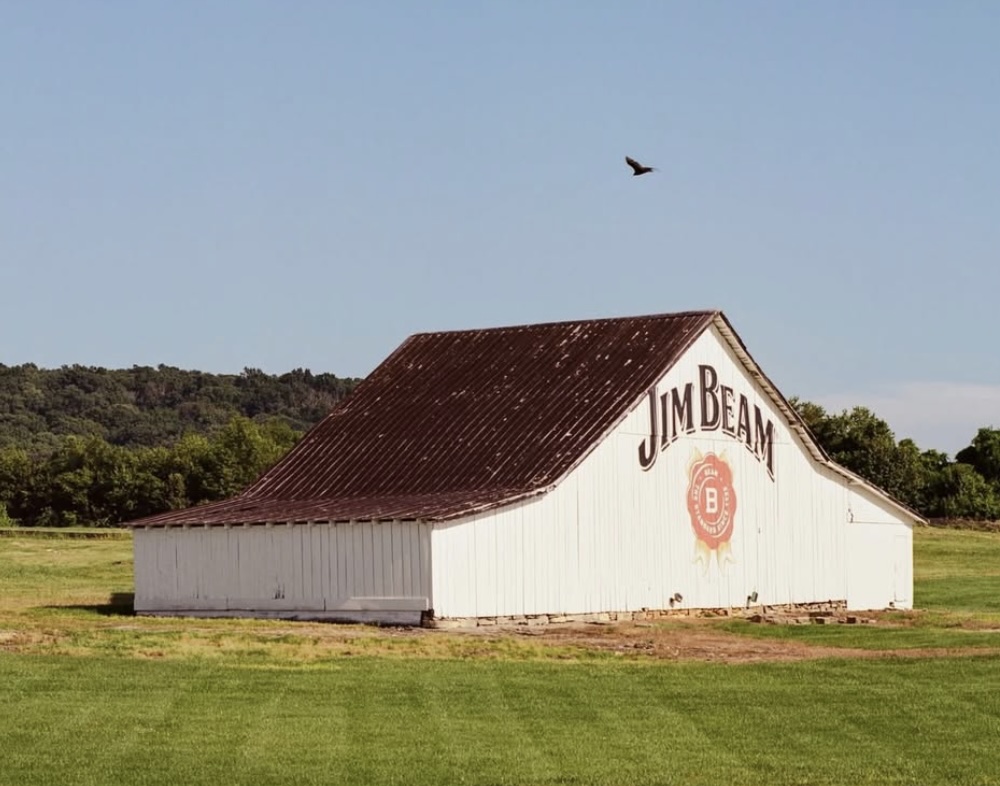
CNN reported on Dec. 21 that Jim Beam bourbon is closing its main campus in Clermont, Kentucky, starting January 1, 2026, through the end of the year. The whiskey brand intends to shift production of Jim Beam over to Fred B. Noe Craft Distillery in Clermont and the Booker Noe Distillery in Boston, Kentucky.
According to the news organization, Kentucky has an “all-time high” of 16.1 million bourbon barrels aging in its warehouses. As barrels age, distillers are charged a state tax, and the tax revenue goes to EMS services and infrastructure. This year, Kentucky distillers paid $75 million in taxes, and the figure was up 163% from 2020, according to Spectrum News.
A prominent whiskey brand like Jim Beam bourbon closing a production hub is worrying news. According to CNN, uncertainty from a trade war sparked by the Trump administration’s destructive tariffs is one of the major factors at play. The company did not announce layoffs, though over 1,000 people are employed across all of its Kentucky facilities.
Jim Beam shared that it will talk with all employees represented by the United Food and Commercial Workers Union to assess how the closure will affect them.
What Lies in Store For The Beleaguered Booze Industry?
Closures of major spirits brands and layoffs have made plenty of headlines around the world in 2025. In Ireland, brands like Tullamore halted production at 3 out of 9 stills as part of a long-term survival strategy. In July, another Irish whiskey brand, Roe & Co, announced it would be pausing production. Jim Beam’s closure of the Clermont distilling campus seems to be mirroring the actions of whiskey brands across the pond.
Industries have their peaks and valleys, yet something about 2025 feels different, like a point of no return for the spirits business. Consumption habits continue to shift away from alcoholic beverages in favor of no and low-alcohol options. Recent studies from the World Health Organization revealing that no amount of alcohol is safe have, undoubtedly, cast a pall over recreational drinking.
The Economist reported on the broader shift in an article titled “How Humankind’s 10M-Year Love Affair With Booze Might End.” The piece chronicled alcohol’s shaping of 10 million years of human history, reporting that human beings potentially acquired the taste for alcohol millions of years ago by eating fallen fruit that had fermented.
Such fermented fruit would have had an ABV of 5%, making it about the same percentage as a light beer. Unlike other mammals, ancient Homo sapiens were able to metabolize ethanol and feel slightly buzzed after consuming the fruit.
Oxford University’s Dr. Robin Dunbar argues that alcohol was used to create social cohesion. When our ancestors — who were likely “fiercely tribal primates” — drank together, they were more likely to bond and have greater well-being instead of fight each other. In short, alcohol kept our social fabric from falling apart during the early days.
So what does this consumer shift mean for the future? Sure, it undoubtedly means more no and low-ABV options. The outlet additionally reported that major alcohol brands were experimenting with botanical and cannabis-driven spirits. It also means that people around the world are sadly socializing less. As people turn to the digital world for social interaction, they are less likely to go out to a bar, have a drink, and meet up in real life.
In December, Heineken launched a Brazilian marketing campaign on WhatsApp that swapped voice memos longer than three minutes for a voucher for a free beer. The beer brand did this in response to a survey where most people shared that even though people prefer to communicate via voice memos over text messages, many end up leaving long monologues that feel like “mini-podcasts,” instead of authentic conversations. Heineken aimed to promote social interaction with the initiative, while promoting its beers, of course.
No responses yet